
How to get more from a single video shoot
A single filming session can produce far more than one video. The valuable, hard-won part is getting a real person relaxed and talking well on camera, so once they’re there, it makes sense to make the most of that time: other topics, other videos, shorter cuts, and single-answer clips for social. With only the extra edit time to pay for, one sitting can become a whole family of videos, which is why the cost per video falls the more you make in one go.
On this page
Everyone is in one place. Use it
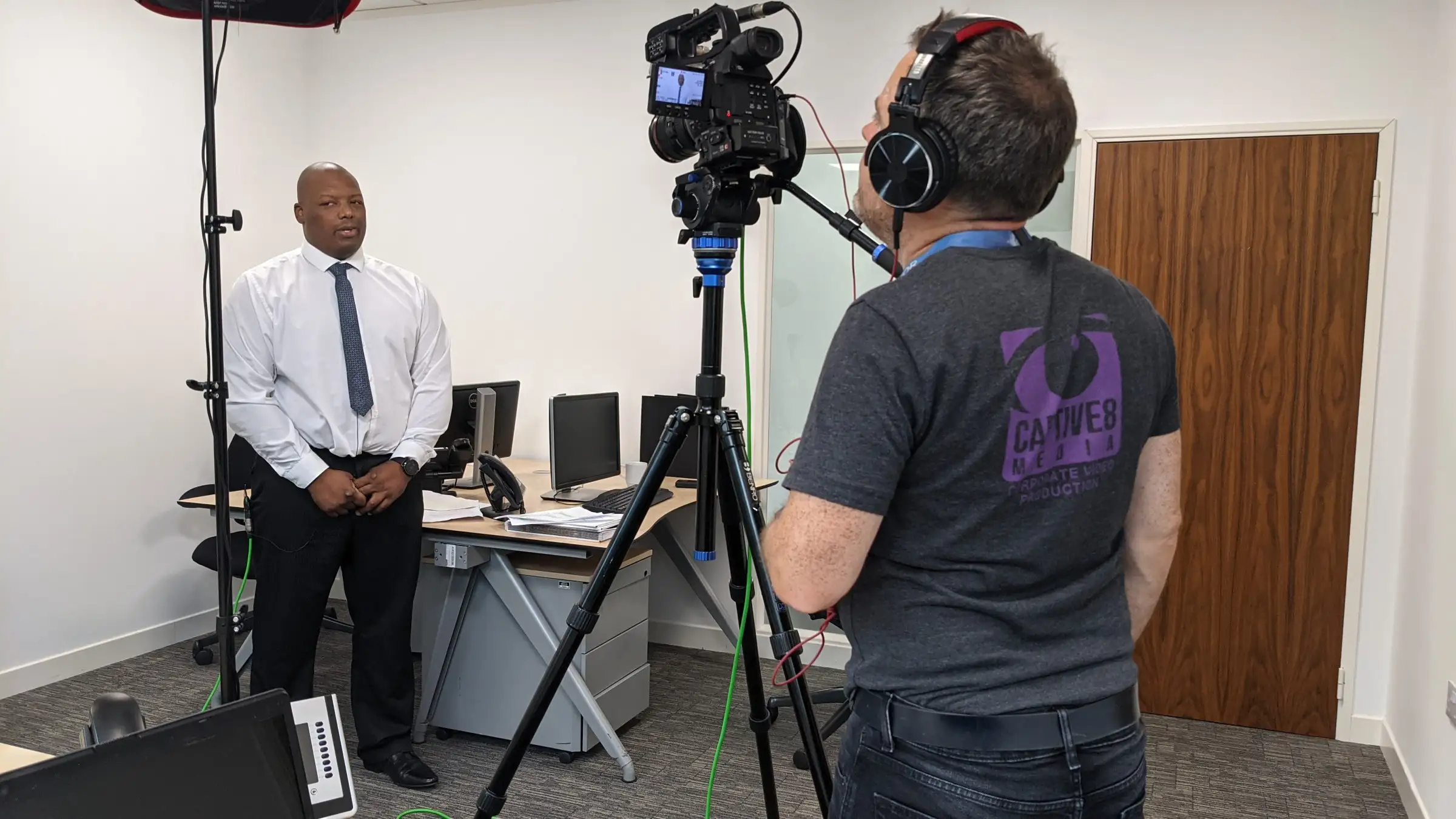
Once we’re there filming, with someone relaxed and talking in front of the camera, that’s the valuable part, and it opens up far more than a single video. So rather than stop at one, we look at what else we can capture while we’ve got them there. Same person, same visit, plenty more to show for it.
Ask more while the camera’s rolling
For example, we’re filming a customer about why they rate a particular product. That’s the main film, and the reason we’re there. But while they’re relaxed and mid-flow, it costs very little to explore other ground: how the installation went, what the support has been like, what it’s actually like to work with you. Each of those can become a video in its own right, with the only real extra cost being the edit.
It needn’t even stay on the same theme, or the same part of the business. While we’re on site with the right people, we could just as easily capture something for a different department: a piece of internal comms, or a training video. Different purpose, same visit.
That’s how a single day quietly turns into three or four useful films.
One interview, many edits
The footage itself also goes further than most people expect. From one interview we can cut the main story, a couple of shorter versions for your website, and a handful of single-answer clips. Those short ones are ideal for somewhere like LinkedIn, where a sharp thirty-second point often earns more attention than a polished three-minute film. You paid to capture it once. It can keep working for you in a dozen different forms.
Questions that work on their own
There is a craft to asking questions in a way that gives the answers a life beyond one edit. We use broad topics, encourage complete answers and revisit important subjects from different angles. Because the interviewer is not normally heard in the finished video, the contributor’s answer needs to make sense without the question sitting in front of it.
That means a strong section can be moved to a different place in the story, used as a standalone clip, combined with another answer or revisited later alongside other customers. In some cases an answer works with almost no context at all, which is particularly useful for short social content or sales follow-up. We plan this deliberately when the wider content requirement is known, and even when it was not part of the original brief, we can often return to a well-structured interview and find useful ways to make the material work again.
Building a library over time
This only compounds. And if we happen to work together again, we can go back into earlier footage and edit people together around a shared theme. Picture three or four different customers, filmed months apart, all speaking to the same benefit: the money they’ve saved, or how good the support has been. That’s a genuinely persuasive piece of content, built largely from footage you’d already paid for, repurposed, and used to expand on a theme.
I love being able to hand a client a whole body of content that goes well beyond what they had in mind when they first got in touch.
Good value, no padding
None of this is about padding an invoice. Quite the opposite. It’s about making the day you’ve already committed to go as far as it sensibly can. If you’d like the detail on what things cost and how we keep them fair, see how much a case study video costs. And if you’re weighing up whether a story is worth capturing properly, our case study and testimonial films are where this approach pays off most.
Most of this is easier with someone who does it every week.
Let’s talk